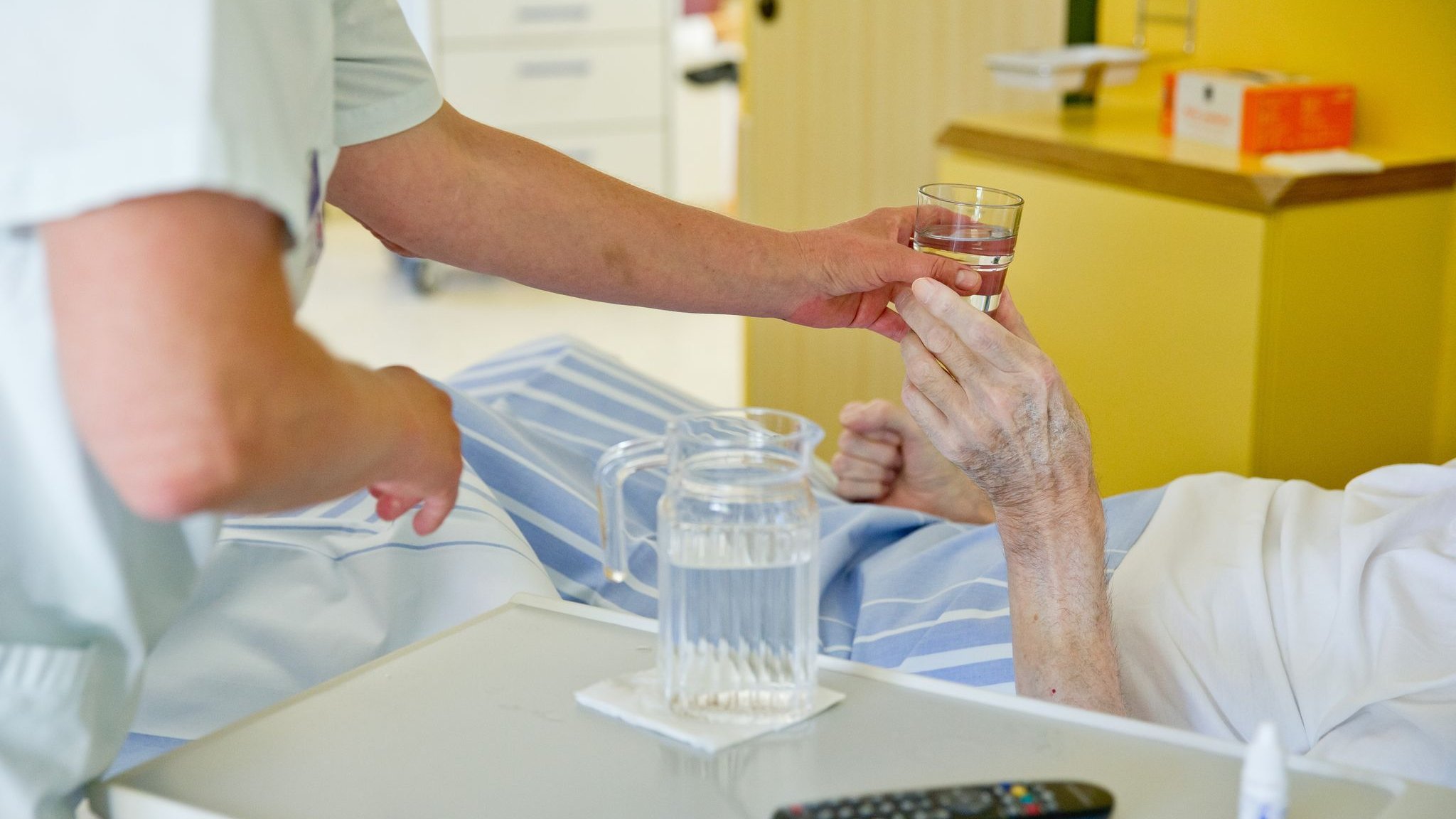
High temperatures: How well equipped are nursing homes and clinics against heat?
According to nurses and physicians, many facilities have so far been insufficiently prepared for heat waves
- Center-left2
- Center-right1
2 agency rewrites / co-publications detected
Summary
According to nurses and physicians, many facilities have so far been insufficiently prepared for heat waves. In the case of nursing homes, it turns out that cooling systems, even in new buildings, are by no means a matter of course: According to data from the Federal Statistical Office, only 14.5 percent of new buildings in the social sector were equipped last year. In a 2022 survey, around 38 percent of hospitals said they had air conditioning systems in patient rooms.
Furthermore, During the heat phase in June, according to estimates by the Robert Koch Institute, around 5,100 people died as a result of the high temperatures, especially older people. For nursing facilities, this is very different according to the BIVA nursing protection association. “There are facilities that take heat protection seriously, have drinking and observation plans, systematically control rooms and create cool living areas.” But there are also further houses with overheated occupant rooms, lack of shading, poorly usable ventilation options and unclear processes. It is also important to actively address, for example through neighborhood help, housing companies, volunteers. “Heat protection is not only a task of care facilities, but a municipal protection task.” Accessibility-free, free and close-to-home offers needed much more, stressed Schulz. The experience from France shows that targeted social measures save lives. Much goes without a big budget - to look specifically for single people, for example. “The most important message is that heat deaths are not an inevitable natural event,” the BIVA Nursing Protection Association emphasized. In view of climate change, heat waves will occur more frequently and more intensively in the future.
In addition, Heat protection concepts would only have an effect if sufficient personnel were available to enrich drinks more often, for example. “A heat protection plan is of little use if it is only in a folder.” Heat protection should not depend on whether an institution, a municipality or relatives accidentally have enough money, staff and awareness of problems. “Protecting life and health is a legal and ethical obligation.” What can help single seniors? “Low-threshold offerings such as cool churches, parishes, district centers, libraries or public cold islands are very important to us,” explained the BIVA Nursing Association. This does not mean, however, that all the patient rooms of these clinics were air-conditioned, explained Gaß. For older people, the heat can become dangerous – especially in nursing facilities and hospitals that are barely prepared for it.
Cross-referenced from 3 sources.
Factual coreconfirmed by several independent voices
According to nurses and physicians, many facilities have so far been insufficiently prepared for heat waves.
reliability low1/3 sourcesIn the case of nursing homes, it turns out that cooling systems, even in new buildings, are by no means a matter of course: According to data from the Federal Statistical Office, only 14.5 percent of new buildings in the social sector were equipped last year.
reliability low1/3 sourcesIn a 2022 survey, around 38 percent of hospitals said they had air conditioning systems in patient rooms.
reliability low1/3 sourcesDuring the heat phase in June, according to estimates by the Robert Koch Institute, around 5,100 people died as a result of the high temperatures, especially older people.
reliability low1/3 sourcesFor nursing facilities, this is very different according to the BIVA nursing protection association. “There are facilities that take heat protection seriously, have drinking and observation plans, systematically control rooms and create cool living areas.” But there are also further houses with overheated occupant rooms, lack of shading, poorly usable ventilation options and unclear processes.
reliability low1/3 sourcesIt is also important to actively address, for example through neighborhood help, housing companies, volunteers. “Heat protection is not only a task of care facilities, but a municipal protection task.” Accessibility-free, free and close-to-home offers needed much more, stressed Schulz. The experience from France shows that targeted social measures save lives. Much goes without a big budget - to look specifically for single people, for example. “The most important message is that heat deaths are not an inevitable natural event,” the BIVA Nursing Protection Association emphasized. In view of climate change, heat waves will occur more frequently and more intensively in the future.
reliability low1/3 sourcesHeat protection concepts would only have an effect if sufficient personnel were available to enrich drinks more often, for example. “A heat protection plan is of little use if it is only in a folder.” Heat protection should not depend on whether an institution, a municipality or relatives accidentally have enough money, staff and awareness of problems. “Protecting life and health is a legal and ethical obligation.” What can help single seniors? “Low-threshold offerings such as cool churches, parishes, district centers, libraries or public cold islands are very important to us,” explained the BIVA Nursing Association.
reliability low1/3 sourcesThis does not mean, however, that all the patient rooms of these clinics were air-conditioned, explained Gaß.
reliability low1/3 sources
Reported detailssecondary facts, each attributed to its source
For older people, the heat can become dangerous – especially in nursing facilities and hospitals that are barely prepared for it.
according to Handelsblatt
Disputedincompatible versions — to verify
No factual contradiction detected between sources.
Framing by sidesame fact, different words — loaded terms highlighted
No notable framing divergence.
Blind spotwhat one side keeps silent
The health and care system must permanently adapt to this. Schulz also warned: "We can continue to be so simple ..."
omitted byRight sidecovered byLeft side
Sources3 sources cross-checked
Center-left2
Center-right1