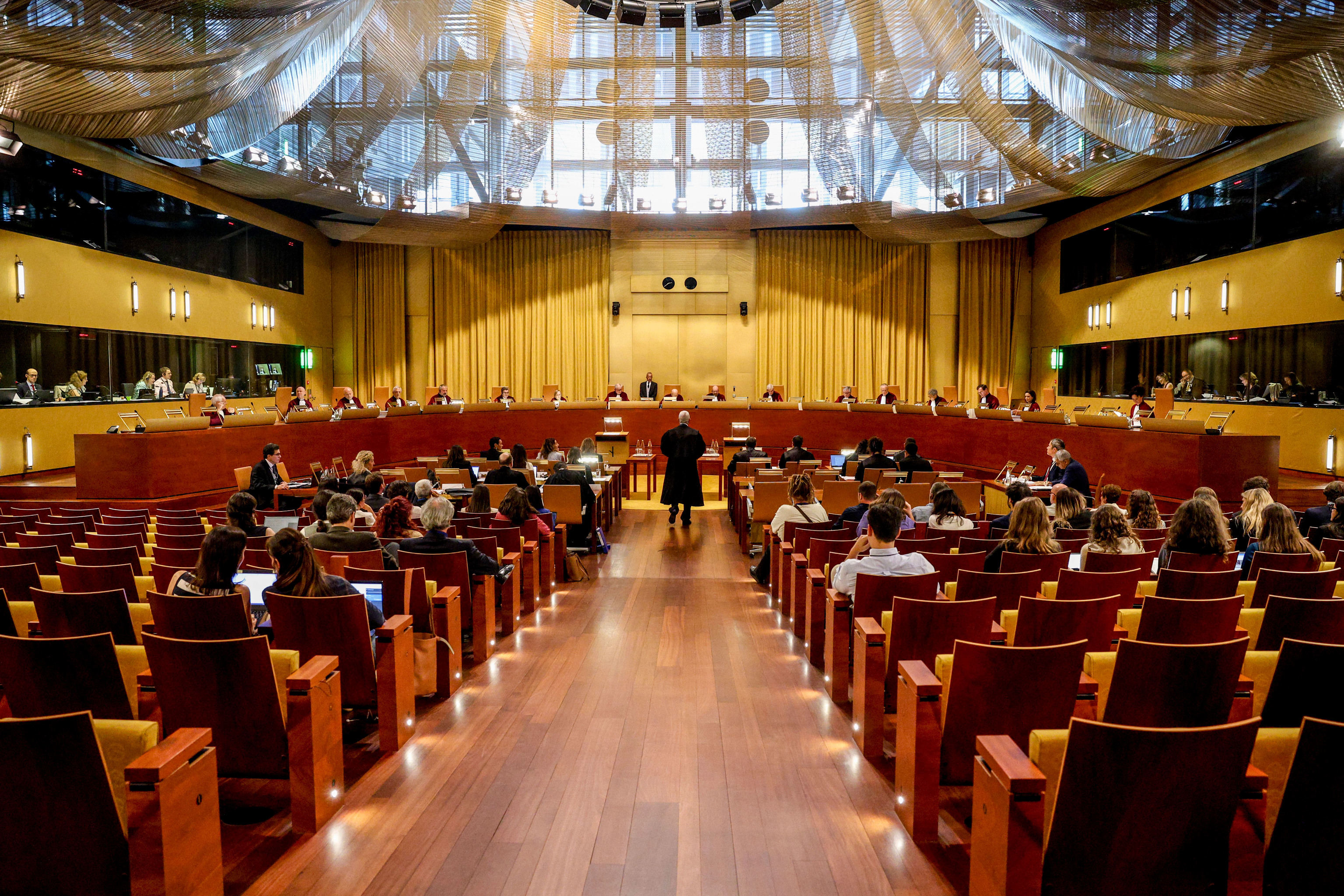
The European Court considers that the rule does not affect the EU's financial interests or violate the anti-terrorism directive
TJUE endorses the amnesty law and outlaws the return of Puigdemont
- Center2
- Center-right2
- Right3
no rewrites detected — all voices distinct
Summary
The decisions are in response to questions raised by the Court of Auditors and the National Court of Auditors about the use of public funds and terrorist offences. The decision raises a barrier to the return of former President Carles Puigdemont, but it is not in itself sufficient to free him from criminal responsibility. In other words, the alleged use of public money in referendums and the external activity in which the idea of the independence of Catalonia was to be defended outside the autonomous community.
Furthermore, The Community judges consider that European law "does not object to a national amnesty law" because, in their view, it serves to "reduce institutional tensions and facilitate a reconciliation scenario.". Luxembourg's response to the questions referred for a preliminary ruling has been that the Spanish rule does not apply to the financial interests of the Union or infringe the anti-terrorism directive. The European policy supports the principle of amnistia and takes it to the tornada of Puigdemont.
In addition, In this sense, the cort has determined that the llei d'amnistia "has not led to a reduction of the Union's own resources" i has assenyalat that is compatible amb the EU, as the dret communautari "no s'opposa a les dispositions processals d'un llei d'amnistia.". In its two judgments this Thursday, the TJUE responded to two questions for a preliminary ruling raised by the Court of Auditors and the National Court of Auditors on the scope of the Amnesty Act.
Cross-referenced from 7 sources.
Factual coreconfirmed by several independent voices
The decisions are in response to questions raised by the Court of Auditors and the National Court of Auditors about the use of public funds and terrorist offences.
reliability moderate2/2 sources
Reported detailssecondary facts, each attributed to its source
The decision raises a barrier to the return of former President Carles Puigdemont, but it is not in itself sufficient to free him from criminal responsibility.
according to El MundoIn other words, the alleged use of public money in referendums and the external activity in which the idea of the independence of Catalonia was to be defended outside the autonomous community.
according to OKDiarioThe Community judges consider that European law "does not object to a national amnesty law" because, in their view, it serves to "reduce institutional tensions and facilitate a reconciliation scenario.".
according to OKDiarioLuxembourg's response to the questions referred for a preliminary ruling has been that the Spanish rule does not apply to the financial interests of the Union or infringe the anti-terrorism directive.
according to El MundoThe European policy supports the principle of amnistia and takes it to the tornada of Puigdemont.
according to Diari de GironaIn this sense, the cort has determined that the llei d'amnistia "has not led to a reduction of the Union's own resources" i has assenyalat that is compatible amb the EU, as the dret communautari "no s'opposa a les dispositions processals d'un llei d'amnistia.".
according to Regió7In its two judgments this Thursday, the TJUE responded to two questions for a preliminary ruling raised by the Court of Auditors and the National Court of Auditors on the scope of the Amnesty Act.
according to El Español — Portada
Disputedincompatible versions — to verify
No factual contradiction detected between sources.
Framing by sidesame fact, different words — loaded terms highlighted
Right side
- regime
Blind spotwhat one side keeps silent
The decisions are in response to questions raised by the Court of Auditors and the National Court of Auditors about the use of public funds and crimes of..
omitted byCentercovered byRight side