This year's July temperatures 3rd highest on record
The highest on record was 27.7 C in 1994, followed by 27.1 C last year, according to the Korea Meteorological Administration, which tracks records using 1973
- Center1
- Agency1
1 agency rewrite / co-publication detected
Summary
The highest on record was 27.7 C in 1994, followed by 27.1 C last year, according to the Korea Meteorological Administration, which tracks records using 1973 as the base year. The previous mark had been 8.8 days in July 2024, followed by 8.5 days in July 1994, the KMA said. The heat was most intense in the southeastern region, with the advisory triggered on 22 days in Daegu, 21 days in Gumi and 20 days in Miryang.
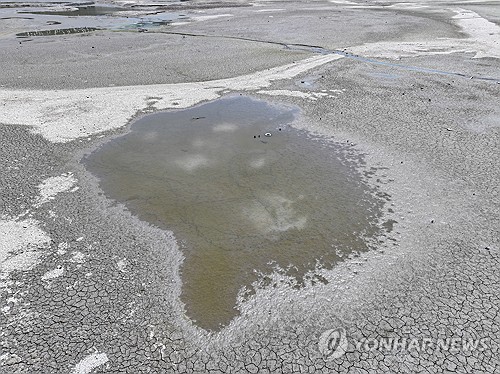
Furthermore, Drought conditions were most severe in the southeastern South Gyeongsang Province, which received 68 mm of rainfall last month, or 21.9 percent of the average July precipitation of 304.7 mm. This undated file photo shows the Hagok Reservoir in the southeastern city of Gyeongju dried up and exposing most of its bed. (Yonhap) hague@yna.co.kr (END). Nationwide precipitation only came to 220.2 millimeters, or 72.3 percent of the average July rainfall of 296.5 mm, according to the KMA. The number of tropical nights when the lowest temperature was 25 C or above came to an average of 9.7 days nationwide, setting a new record.
In addition, Also in July this year, a heat wave advisory was issued on an average of 8.9 days nationwide, as the daily maximum temperature climbed to 33 C or higher. By contrast, the central region saw far fewer days under heat wave advisories, with only two in Seoul.
Cross-referenced from 2 sources.
Factual coreconfirmed by several independent voices
The highest on record was 27.7 C in 1994, followed by 27.1 C last year, according to the Korea Meteorological Administration, which tracks records using 1973 as the base year.
reliability low1/2 sourcesThe previous mark had been 8.8 days in July 2024, followed by 8.5 days in July 1994, the KMA said.
reliability low1/2 sourcesThe heat was most intense in the southeastern region, with the advisory triggered on 22 days in Daegu, 21 days in Gumi and 20 days in Miryang.
reliability low1/2 sourcesDrought conditions were most severe in the southeastern South Gyeongsang Province, which received 68 mm of rainfall last month, or 21.9 percent of the average July precipitation of 304.7 mm. This undated file photo shows the Hagok Reservoir in the southeastern city of Gyeongju dried up and exposing most of its bed. (Yonhap) hague@yna.co.kr (END)
reliability low1/2 sourcesNationwide precipitation only came to 220.2 millimeters, or 72.3 percent of the average July rainfall of 296.5 mm, according to the KMA.
reliability low1/2 sourcesThe number of tropical nights when the lowest temperature was 25 C or above came to an average of 9.7 days nationwide, setting a new record.
reliability low1/2 sourcesAlso in July this year, a heat wave advisory was issued on an average of 8.9 days nationwide, as the daily maximum temperature climbed to 33 C or higher.
reliability low1/2 sourcesBy contrast, the central region saw far fewer days under heat wave advisories, with only two in Seoul.
reliability low1/2 sources
Disputedincompatible versions — to verify
No factual contradiction detected between sources.
Framing by sidesame fact, different words — loaded terms highlighted
No notable framing divergence.
Blind spotwhat one side keeps silent
No blind spot detected: every side covers the same facts.
Sources2 sources cross-checked
Center1
Agency1