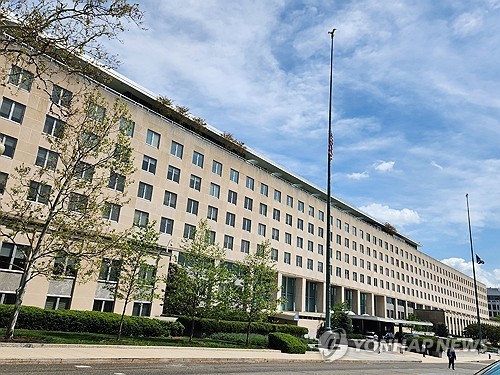
U.S. renews warning against travel to N. Korea, citing 'serious' risk of arrest, detention
The US put the ban in place in September 2017 after the North released Otto Warmbier, a US college student, following 17 months of detention on charges of...
- Center1
- Agency1
1 agency rewrite / co-publication detected
Summary
The US put the ban in place in September 2017 after the North released Otto Warmbier, a US college student, following 17 months of detention on charges of anti-state activities. A State Department spokesperson made the remarks in response to Yonhap News Agency's request for comment on a recent call by Robert King, former US special envoy for North Korean human rights issues, to ease the travel ban that has been in place since 2017. 31 next year as the current measure is set to expire on Aug.
Furthermore, Due to that strong commitment, the Department's Travel Advisory for Americans regarding the Democratic People's Republic of Korea remains at Level 4: Do Not Travel," the spokesperson said, referring to North Korea by its official name. Despite the warning, the spokesperson underscored that US President Donald Trump has made clear the United States remains open to dialogue with Pyongyang "without preconditions." "The Trump Administration has no higher priority than the safety and security of Americans. Secretary (Marcó) Rubio extended the existing Geographic Travel Restriction that makes US passports invalid for travel to, in, or through North Korea due to continuing concerns over the serious risk to Americans of arrest and long-term detention in North Korea." Last month, the department posted a notice on the Federal Register announcing a decision to extend the travel ban until Aug.
In addition, Warmbier returned home in a vegetative state and died days later. 5 (Yonhap) -- The U.S. State Department on Wednesday reiterated its warning for Americans not to travel to North Korea "for any reason," citing the "serious risk" of arrest and long-term detention in the reclusive state.
Cross-referenced from 2 sources.
Factual coreconfirmed by several independent voices
The US put the ban in place in September 2017 after the North released Otto Warmbier, a US college student, following 17 months of detention on charges of anti-state activities.
reliability low1/2 sourcesA State Department spokesperson made the remarks in response to Yonhap News Agency's request for comment on a recent call by Robert King, former US special envoy for North Korean human rights issues, to ease the travel ban that has been in place since 2017.
reliability low1/2 sources31 next year as the current measure is set to expire on Aug.
reliability low1/2 sourcesDue to that strong commitment, the Department's Travel Advisory for Americans regarding the Democratic People's Republic of Korea remains at Level 4: Do Not Travel," the spokesperson said, referring to North Korea by its official name.
reliability low1/2 sourcesDespite the warning, the spokesperson underscored that US President Donald Trump has made clear the United States remains open to dialogue with Pyongyang "without preconditions." "The Trump Administration has no higher priority than the safety and security of Americans.
reliability low1/2 sourcesSecretary (Marcó) Rubio extended the existing Geographic Travel Restriction that makes US passports invalid for travel to, in, or through North Korea due to continuing concerns over the serious risk to Americans of arrest and long-term detention in North Korea." Last month, the department posted a notice on the Federal Register announcing a decision to extend the travel ban until Aug.
reliability low1/2 sourcesWarmbier returned home in a vegetative state and died days later.
reliability low1/2 sources
Reported detailssecondary facts, each attributed to its source
5 (Yonhap) -- The U.S. State Department on Wednesday reiterated its warning for Americans not to travel to North Korea "for any reason," citing the "serious risk" of arrest and long-term detention in the reclusive state.
according to Yonhap News
Disputedincompatible versions — to verify
No factual contradiction detected between sources.
Framing by sidesame fact, different words — loaded terms highlighted
No notable framing divergence.
Blind spotwhat one side keeps silent
No blind spot detected: every side covers the same facts.
Sources2 sources cross-checked
Center1
Agency1