History: Beginning of the end of the GDR? The flame death of Oskar Brüsewitz
Fifty years later, this fatal protest action is regarded by some as the beginning of the end of the GDR. “Oskar Brüsewitz was a harbinger of the system change,” Manfred said
- Center-left4
- Center-right1
4 agency rewrites / co-publications detected

Summary
It must not be transfigured. But she did not want to judge Brüsewitz simply: "He felt called by God, not to be silent." Brüsewitz, born in 1929, was a shoemaker in Chemnitz in Saxony and temporarily in West Germany. After a failed first marriage, he married a second time in the GDR in 1955: the deaconess Christa Roland. “That’s why he was already observed in 1956 due to system-critical statements, by the Ministry of State Security.” “Der Störenfried” The shoemaker trained as a pastor in the preacher school in Erfurt from 1964 to 1969 and became a pastor in Rippicha.
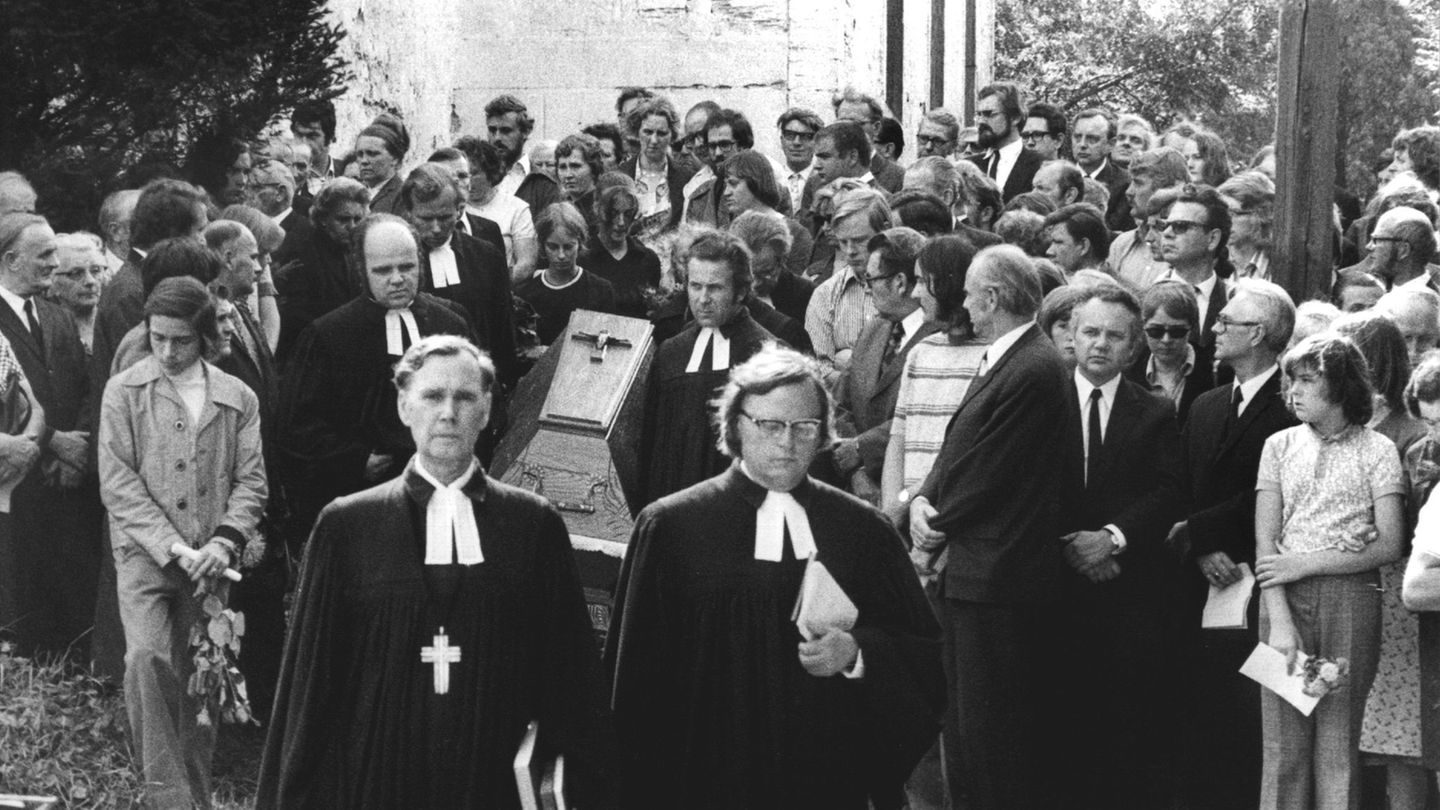
Furthermore, A few weeks later, in November 1976, Biermann’s own expatriation from the GDR drew many more circles. August 1976 attracted 400 people, including 70 pastors in the Talar. August 1976 Oskar Brüsewitz is said to have cut long-stemmed roses in the garden of his rectory in Rippicha in Saxony-Anhalt and put them in a vase in the stairwell.
Cross-referenced from 5 sources.
Factual coreconfirmed by several independent voices
It must not be transfigured. But she did not want to judge Brüsewitz simply: "He felt called by God, not to be silent." Brüsewitz, born in 1929, was a shoemaker in Chemnitz in Saxony and temporarily in West Germany.
reliability low1/3 sourcesAfter a failed first marriage, he married a second time in the GDR in 1955: the deaconess Christa Roland.
reliability low1/3 sources“That’s why he was already observed in 1956 due to system-critical statements, by the Ministry of State Security.” “Der Störenfried” The shoemaker trained as a pastor in the preacher school in Erfurt from 1964 to 1969 and became a pastor in Rippicha.
reliability low1/3 sourcesA few weeks later, in November 1976, Biermann’s own expatriation from the GDR drew many more circles.
reliability low1/3 sourcesAugust 1976 attracted 400 people, including 70 pastors in the Talar.
reliability low1/3 sourcesAugust 1976 Oskar Brüsewitz is said to have cut long-stemmed roses in the garden of his rectory in Rippicha in Saxony-Anhalt and put them in a vase in the stairwell.
reliability low1/3 sources
Disputedincompatible versions — to verify
No factual contradiction detected between sources.
Framing by sidesame fact, different words — loaded terms highlighted
No notable framing divergence.
Blind spotwhat one side keeps silent
No blind spot detected: every side covers the same facts.
Sources4 sources cross-checked
Center-left3
Center-right1