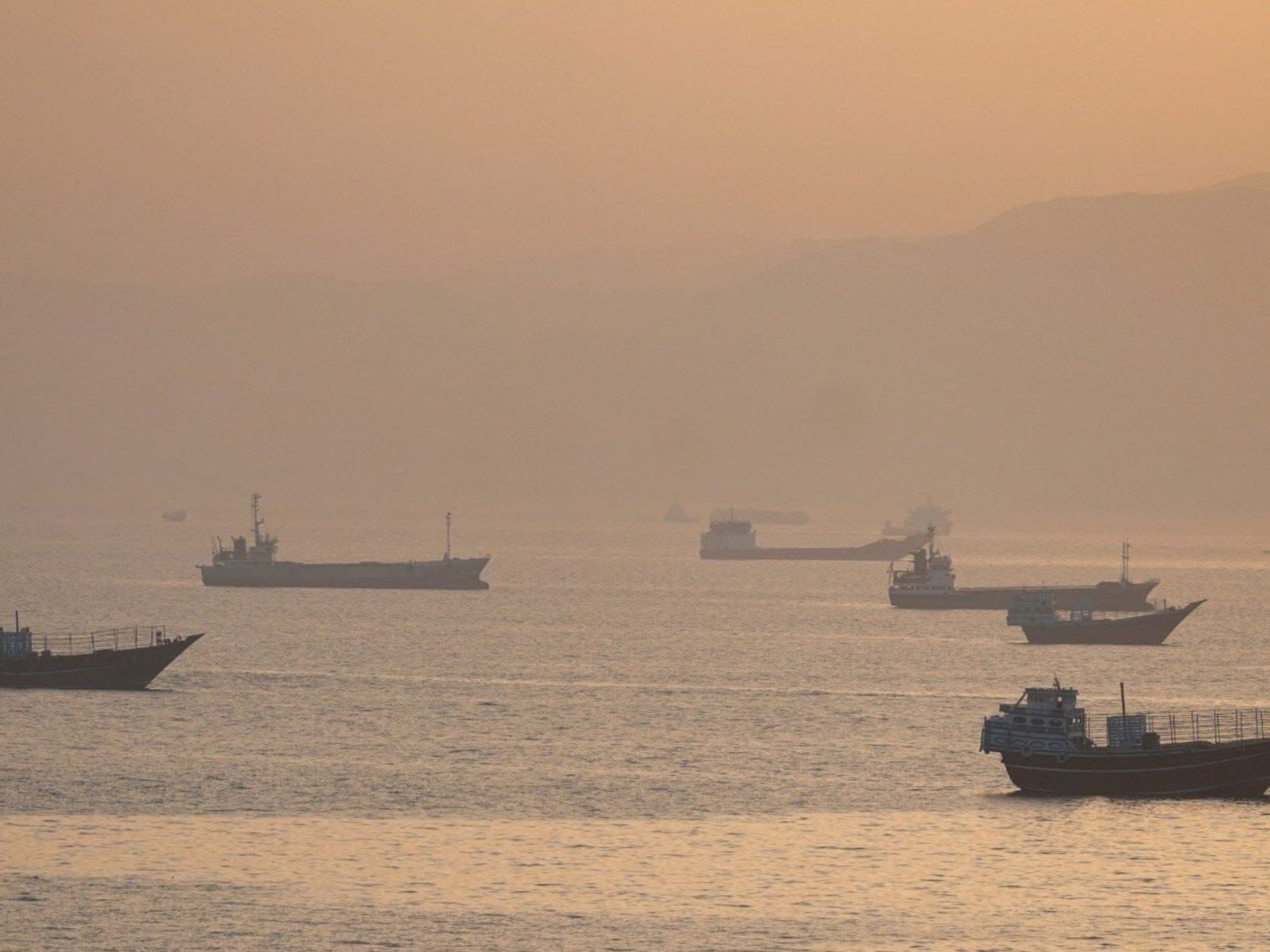
Iran's regime insists that it will keep the Strait of Ormuz closed if the United States does not accept its conditions
The Strait of Ormuz will remain closed until the United States meets its commitments under the protocol of agreement signed in June, announced the
- Center1
- Center-right1
1 agency rewrite / co-publication detected

Summary
The Strait of Ormuz will remain closed until the United States meets its commitments under the agreement protocol signed in June, the Iranian main negotiator, Mohamad Baqer Qalibaf, announced on Tuesday. The war between Iran and the United States broke out on February 28 with the American-Israeli attacks on the Islamic Republic, which triggered a regional conflict. Although Washington and Tehran signed a truce on April 8, sporadic clashes and tension persist, especially in and around the Strait of Ormuz.
Furthermore, During his speech, Qalibaf stated that Iran was "ready to inflict an even more crushing defeat on the enemy, proportional to its actions and advances.". The strategic maritime track, blocked by Tehran, "will not open until the US commitments set out in the protocol of agreement are implemented," said Qalibaf, who is also President of Parliament. On Monday, Iran stated that the talks "continue seriously" and that views are being exchanged on the text of a "joint declaration.".
In addition, Iran and Oman, on the other side of the Strait, have been discussing the future of navigation through the Ormuz for weeks. He also urged Iran to surrender in this war which, together with the increase in oil, is becoming a political burden for the Republican magnate.
Cross-referenced from 2 sources.
Factual coreconfirmed by several independent voices
The Strait of Ormuz will remain closed until the United States meets its commitments under the agreement protocol signed in June, the Iranian main negotiator, Mohamad Baqer Qalibaf, announced on Tuesday.
reliability low1/2 sourcesThe war between Iran and the United States broke out on February 28 with the American-Israeli attacks on the Islamic Republic, which triggered a regional conflict.
reliability low1/2 sourcesAlthough Washington and Tehran signed a truce on April 8, sporadic clashes and tension persist, especially in and around the Strait of Ormuz.
reliability low1/2 sourcesDuring his speech, Qalibaf stated that Iran was "ready to inflict an even more crushing defeat on the enemy, proportional to its actions and advances.".
reliability low1/2 sourcesThe strategic maritime track, blocked by Tehran, "will not open until the US commitments set out in the protocol of agreement are implemented," said Qalibaf, who is also President of Parliament.
reliability low1/2 sourcesOn Monday, Iran stated that the talks "continue seriously" and that views are being exchanged on the text of a "joint declaration.".
reliability low1/2 sourcesIran and Oman, on the other side of the Strait, have been discussing the future of navigation through the Ormuz for weeks.
reliability low1/2 sourcesHe also urged Iran to surrender in this war which, together with the increase in oil, is becoming a political burden for the Republican magnate.
reliability low1/2 sources
Disputedincompatible versions — to verify
No factual contradiction detected between sources.
Framing by sidesame fact, different words — loaded terms highlighted
Center
- regime
Blind spotwhat one side keeps silent
No blind spot detected: every side covers the same facts.
Sources2 sources cross-checked
Center1
Center-right1
