Animals: New ape species discovered in Congo
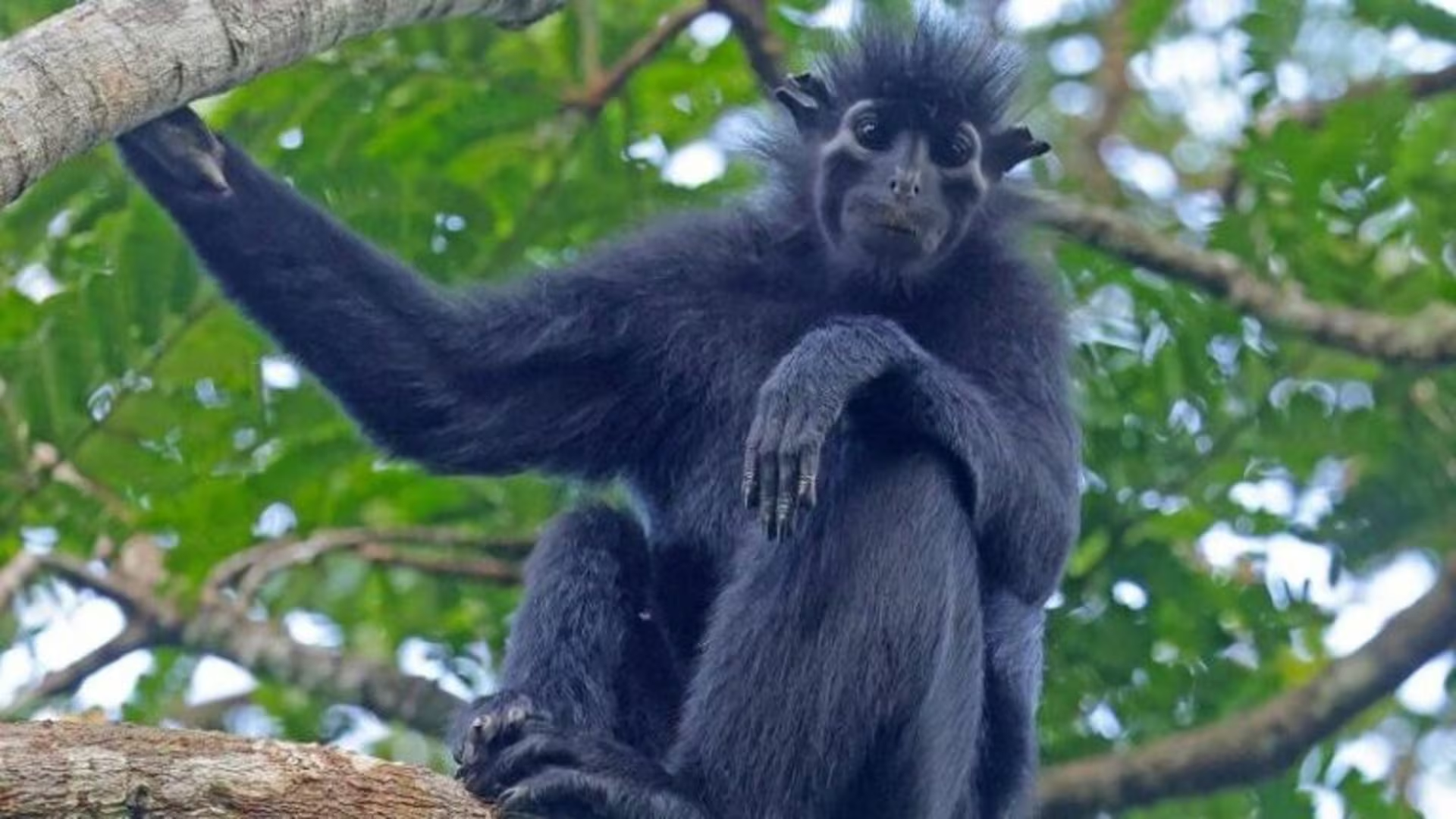
Genetic, anatomical and acoustic analyses have now confirmed that the stub monkey with the scientific name Colobus congoensis has its own
- Center-left2
- Center-right1
- Right1
3 agency rewrites / co-publications detected
Summary
Genetic, anatomical and acoustic analyses have now confirmed that the stub monkey with the scientific name Colobus congoensis is a species of its own. Even in regions that have already been scientifically researched, completely new species are still being discovered. Ten years later, there was a renewed sighting of the primate, which led to further investigations.
Furthermore, Participants were a research team from Florida Atlantic University, the Lukuru Wildlife Research Foundation, Yale University, the City University of New York as well as Lomami National Park and the Frankfurt Zoological Society. The inhabitants of the Congo Basin call it “Likweli”. The new species is most closely related to the black stub monkeys (Colobus satanas), although the two species are separated by more than 1,200 kilometres of forest, according to a study in the scientific magazine "PLOS One".
In addition, Between 2018 and 2022, the scientific team recorded 114 sightings in an estimated range of just 1,700 square kilometres – an unusually small area for stub monkeys. Co-author John Hart from the Lukuru Wildlife Research Station: “This discovery highlights how much biodiversity remains unexplored in the Central Congo Basin and how this region continues to shape our understanding of primate evolution and conservation.”. It is smaller than related monkeys, namely about seven kilograms.
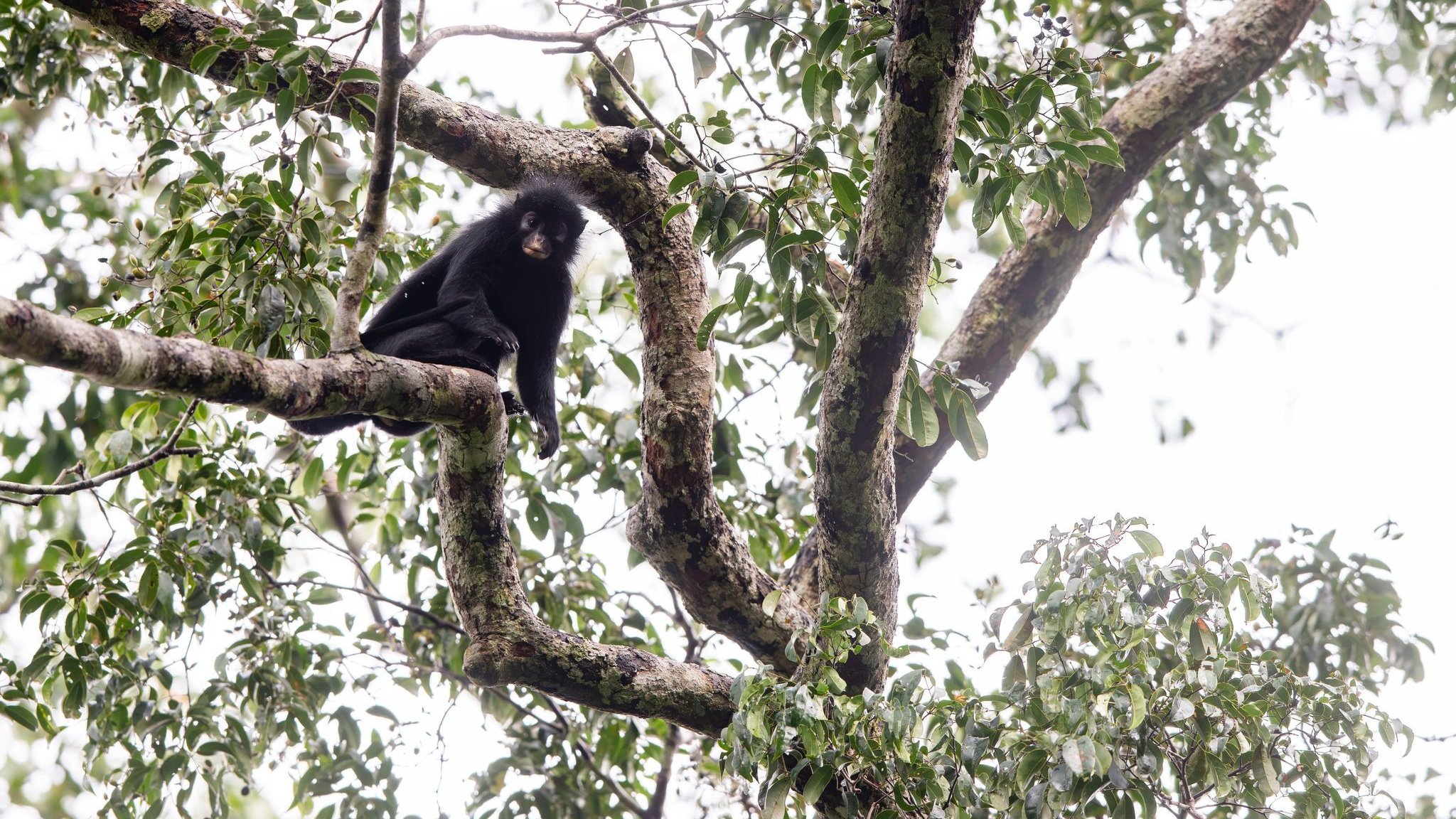
Moreover, However, the photograph taken in a remote region in the rainforest was not meaningful enough to prove its own species.
Cross-referenced from 4 sources.
Factual coreconfirmed by several independent voices
Genetic, anatomical and acoustic analyses have now confirmed that the stub monkey with the scientific name Colobus congoensis is a species of its own.
reliability low1/4 sourcesEven in regions that have already been scientifically researched, completely new species are still being discovered.
reliability low1/4 sourcesTen years later, there was a renewed sighting of the primate, which led to further investigations.
reliability low1/4 sourcesParticipants were a research team from Florida Atlantic University, the Lukuru Wildlife Research Foundation, Yale University, the City University of New York as well as Lomami National Park and the Frankfurt Zoological Society.
reliability low1/4 sourcesThe inhabitants of the Congo Basin call it “Likweli”.
reliability low1/4 sourcesThe new species is most closely related to the black stub monkeys (Colobus satanas), although the two species are separated by more than 1,200 kilometres of forest, according to a study in the scientific magazine "PLOS One".
reliability low1/4 sourcesBetween 2018 and 2022, the scientific team recorded 114 sightings in an estimated range of just 1,700 square kilometres – an unusually small area for stub monkeys.
reliability low1/4 sourcesCo-author John Hart from the Lukuru Wildlife Research Station: “This discovery highlights how much biodiversity remains unexplored in the Central Congo Basin and how this region continues to shape our understanding of primate evolution and conservation.”
reliability low1/4 sources
Reported detailssecondary facts, each attributed to its source
It is smaller than related monkeys, namely about seven kilograms.
according to Kronen ZeitungHowever, the photograph taken in a remote region in the rainforest was not meaningful enough to prove its own species.
according to Kronen ZeitungBut the future of animals in the Congo basin is already threatened.
according to Handelsblatt
Disputedincompatible versions — to verify
No factual contradiction detected between sources.
Framing by sidesame fact, different words — loaded terms highlighted
No notable framing divergence.
Blind spotwhat one side keeps silent
No blind spot detected: every side covers the same facts.