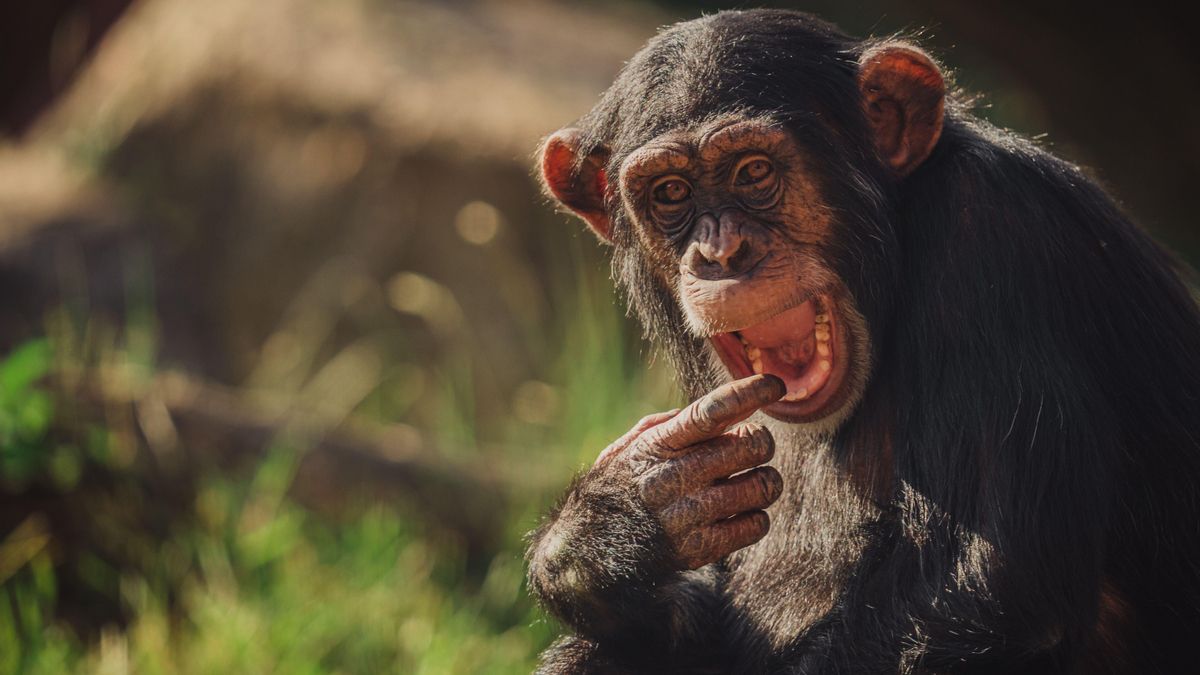
The laughter that unites humans and apes for 15 million years could explain the origin of language
The laughter that unites humans and apes for 15 million years could explain the origin of language.
- Left1
- Right1
no rewrites detected — all voices distinct
Summary
The laughter that unites humans and apes for 15 million years could explain the origin of language. To study this behavior, researchers analyzed recordings of 17 individuals: four orangutans, two gorillas, three bonobos, four chimpanzees and four human children. The authors examined 140 sequences of laughter and measured the interval between each sound explosion during controlled playful interactions with family humans who specifically sought to provoke laughter through physical games and tickle sessions. tempo. ".
Furthermore, To catalogue them objectively, they studied their structure: how long each sound lasted, how long was each "ja" and whether the rhythm remained stable or changed. Comparing the records, they found that all great apes have a laugh at a regular rate, which researchers call "isocrony.". The idea is not that laughter "created" language, but that both skills share a basis: the ability to control sounds, times and vocal patterns. Because before we could build phrases, tell stories or sing, our ancestors had to dominate something more basic: control their voice.
Cross-referenced from 2 sources.
Factual coreconfirmed by several independent voices
The laughter that unites humans and apes for 15 million years could explain the origin of language.
reliability moderate2/2 sourcesTo study this behavior, researchers analyzed recordings of 17 individuals: four orangutans, two gorillas, three bonobos, four chimpanzees and four human children.
reliability moderate2/2 sources
Reported detailssecondary facts, each attributed to its source
The authors examined 140 sequences of laughter and measured the interval between each sound explosion during controlled playful interactions with family humans who specifically sought to provoke laughter through physical games and tickle sessions. tempo. ".
according to eldiario.es — PortadaTo catalogue them objectively, they studied their structure: how long each sound lasted, how long was each "ja" and whether the rhythm remained stable or changed. Comparing the records, they found that all great apes have a laugh at a regular rate, which researchers call "isocrony.".
according to ABC — PortadaThe idea is not that laughter "created" language, but that both skills share a basis: the ability to control sounds, times and vocal patterns. Because before we could build phrases, tell stories or sing, our ancestors had to dominate something more basic: control their voice.
according to ABC — Portada
Disputedincompatible versions — to verify
No factual contradiction detected between sources.
Framing by sidesame fact, different words — loaded terms highlighted
No notable framing divergence.
Blind spotwhat one side keeps silent
No blind spot detected: every side covers the same facts.
Sources2 sources cross-checked
Right1