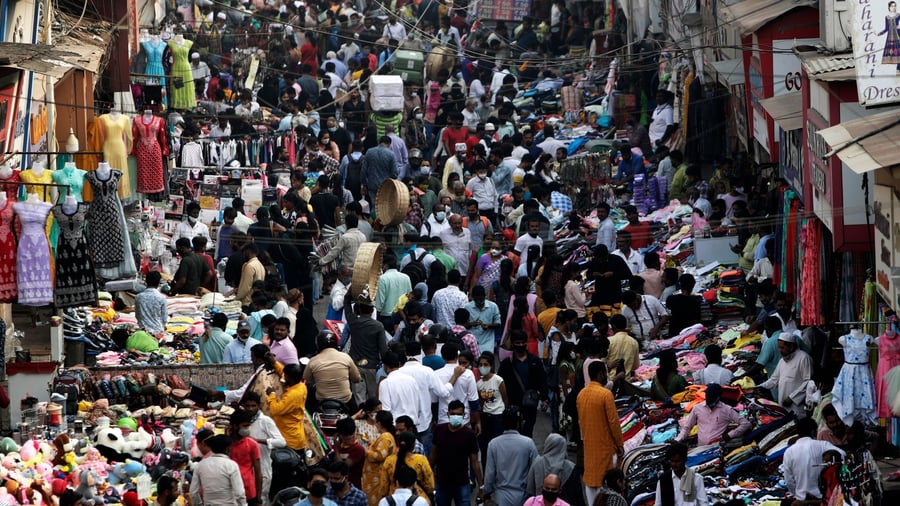
World Population Day: The world population is growing - for how long?
But humanity is heading for a turning point: in the mid-2080s, according to the current UN forecast, the world population will be around 10.3 billion people
- Center-left3
- Center-right1
3 agency rewrites / co-publications detected
Summary
But humanity is heading for a turning point: in the mid-2080s, according to the current UN forecast, the world population will reach its peak with around 10.3 billion people. Under optimal conditions, experts believe that the Earth can feed the projected 10.3 billion people. Since the birth of modern humans about 50,000 years ago, there have been an estimated 117 billion people on Earth.
Furthermore, The average number of children per woman has also declined significantly worldwide in recent decades: from four children in the mid-1970s to currently about 2.2, explains Frank Swiaczny from the Federal Institute for Population Research (BiB). In some of these countries, such as the Democratic Republic of Congo, Nigeria and Somalia, the population is expected to double between 2024 and 2054. Germany is already no longer growing: The population fell to 83.5 million people at the end of 2025.
In addition, As a result, the people who live on earth today make up a considerable proportion – a good 7 percent – of all people who were ever born.
Cross-referenced from 4 sources.
Factual coreconfirmed by several independent voices
But humanity is heading for a turning point: in the mid-2080s, according to the current UN forecast, the world population will reach its peak with around 10.3 billion people.
reliability low1/2 sourcesUnder optimal conditions, experts believe that the Earth can feed the projected 10.3 billion people.
reliability low1/2 sourcesSince the birth of modern humans about 50,000 years ago, there have been an estimated 117 billion people on Earth.
reliability low1/2 sourcesThe average number of children per woman has also declined significantly worldwide in recent decades: from four children in the mid-1970s to currently about 2.2, explains Frank Swiaczny from the Federal Institute for Population Research (BiB).
reliability low1/2 sourcesIn some of these countries, such as the Democratic Republic of Congo, Nigeria and Somalia, the population is expected to double between 2024 and 2054.
reliability low1/2 sourcesGermany is already no longer growing: The population fell to 83.5 million people at the end of 2025.
reliability low1/2 sourcesAs a result, the people who live on earth today make up a considerable proportion – a good 7 percent – of all people who were ever born.
reliability low1/2 sources
Disputedincompatible versions — to verify
No factual contradiction detected between sources.
Framing by sidesame fact, different words — loaded terms highlighted
No notable framing divergence.
Blind spotwhat one side keeps silent
No blind spot detected: every side covers the same facts.
Sources3 sources cross-checked
Center-left2
Center-right1