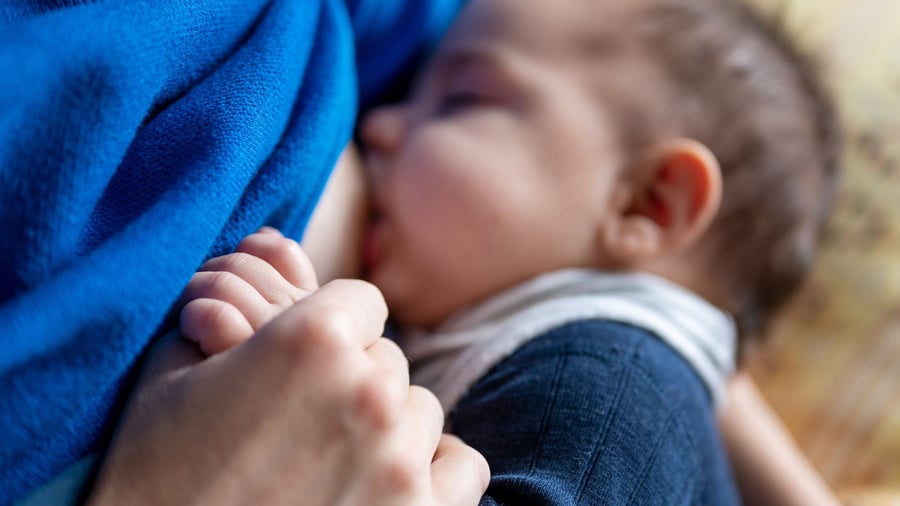
World Breastfeeding Week: Breastfeeding is increasing worldwide - and could increase even further
Increased promotion of breastfeeding could prevent nearly 400,000 child deaths and around 140,000 maternal deaths each year
- Center-left4
- Center-right1
4 agency rewrites / co-publications detected
Summary
Increased promotion of breastfeeding could prevent nearly 400,000 child deaths and around 140,000 maternal deaths each year. There has been an ongoing upward trend in breastfeeding in Germany since a historical low point in the early 1970s. Exclusive breastfeeding in the first six months of life increased from around 37 percent in 2012 to more than 47 percent today, according to a communication from the World Health Organization (WHO) in the light of the World Breastfeeding Week.
Furthermore, According to the results of the nationwide "Study on the health of children and adolescents in Germany" (KiGGS Wave 2; 2014-2017), 68 percent of infants were breastfed exclusively after birth, 40 percent received exclusively breast milk until the end of the fourth month of life. © dpa-infocom, dpa:260802-930-472497/1. For the analysis, the authors evaluated 78 studies from countries such as the USA, Germany, Australia, India and Mexico. What struck me the most was how often well-intentioned, routine advice is not yet based on scientific evidence. If milk has to be pumped out, pumping by hand is the better method.
In addition, After that, according to WHO, complementary food can be started while the children are breastfed until the age of two years or even beyond. Quantity of milk, soothers, breast pump Since breastfeeding rates are still behind the targets in many countries, a recently published scientific study has looked at the simple helps to increase the proportion of breastfeeding mothers.
Cross-referenced from 5 sources.
Factual coreconfirmed by several independent voices
Increased promotion of breastfeeding could prevent nearly 400,000 child deaths and around 140,000 maternal deaths each year.
reliability low1/2 sourcesThere has been an ongoing upward trend in breastfeeding in Germany since a historical low point in the early 1970s.
reliability low1/2 sourcesExclusive breastfeeding in the first six months of life increased from around 37 percent in 2012 to more than 47 percent today, according to a communication from the World Health Organization (WHO) in the light of the World Breastfeeding Week.
reliability low1/2 sourcesAccording to the results of the nationwide "Study on the health of children and adolescents in Germany" (KiGGS Wave 2; 2014-2017), 68 percent of infants were breastfed exclusively after birth, 40 percent received exclusively breast milk until the end of the fourth month of life. © dpa-infocom, dpa:260802-930-472497/1
reliability low1/2 sourcesFor the analysis, the authors evaluated 78 studies from countries such as the USA, Germany, Australia, India and Mexico. What struck me the most was how often well-intentioned, routine advice is not yet based on scientific evidence.
reliability low1/2 sourcesIf milk has to be pumped out, pumping by hand is the better method.
reliability low1/2 sourcesAfter that, according to WHO, complementary food can be started while the children are breastfed until the age of two years or even beyond.
reliability low1/2 sourcesQuantity of milk, soothers, breast pump Since breastfeeding rates are still behind the targets in many countries, a recently published scientific study has looked at the simple helps to increase the proportion of breastfeeding mothers.
reliability low1/2 sources
Disputedincompatible versions — to verify
No factual contradiction detected between sources.
Framing by sidesame fact, different words — loaded terms highlighted
No notable framing divergence.
Blind spotwhat one side keeps silent
Increased promotion of breastfeeding could result in nearly 400,000 child deaths and around 140,000 maternal deaths each year
omitted byRight sidecovered byLeft sideThere has been an ongoing upward trend in breastfeeding in Germany since a historical low point in the early 1970s.
omitted byRight sidecovered byLeft sideExclusive breastfeeding in the first six months of life increased from around 37 percent in 2012 to more than 47 percent today
omitted byRight sidecovered byLeft sideAccording to the results of the nationwide "Study on the health of children and adolescents in Germany" (KiGGS Wave 2; 2014-2017),..
omitted byRight sidecovered byLeft sideFor the analysis, the authors evaluated 78 studies from countries such as the USA, Germany, Australia, India and Mexico. “What I do about ...”
omitted byRight sidecovered byLeft side
Sources4 sources cross-checked
Center-left3
Center-right1

